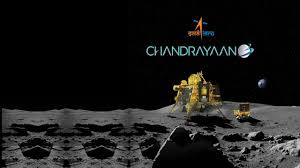
Chandrayaan-3, the latest lunar mission by the Indian Space Research Organisation (ISRO), stands as a testament to India’s growing prowess in space technology. This mission, which achieved a historic soft landing on the Moon’s south pole, has brought India global recognition and has contributed significantly to lunar science.
In this article, we explore everything you need to know about Chandrayaan-3, its objectives, achievements, and the critical scientific discoveries it has delivered so far.
Mission Overview
Chandrayaan-3 is the third lunar mission in India’s Chandrayaan series. Following the partial success of Chandrayaan-2 in 2019, ISRO meticulously planned Chandrayaan-3 to address previous challenges and accomplish a successful lunar landing.
- Launch Date: July 14, 2023
- Landing Date: August 23, 2023
- Landing Site: Near the Moon’s south pole, a region of immense scientific interest.
- Launch Vehicle: GSLV Mk III (LVM-3), India’s reliable heavy-lift rocket.
The mission was executed on a limited budget, reflecting ISRO’s hallmark of cost-effective yet highly efficient space missions.
Budget-Friendly Approach
The mission’s estimated cost of approximately ₹615 crore (~$75 million) underscores ISRO’s ability to execute cost-efficient yet highly effective missions. This budget is significantly lower than similar lunar missions by other space agencies, making Chandrayaan-3 a marvel of engineering and economic planning.
Mission Objectives
The primary objectives of Chandrayaan-3 included:
- Soft Lunar Landing: Demonstrate a controlled landing on the lunar surface, a feat only a handful of nations have achieved.
- Rover Deployment: Conduct in-situ scientific exploration using the Pragyan rover.
- Lunar Science: Study the composition and properties of the Moon’s surface, focusing on the south pole.
These objectives align with ISRO’s vision of advancing space science and positioning India as a leader in lunar exploration.
Key Components of Chandrayaan-3
Chandrayaan-3 comprises three main components:
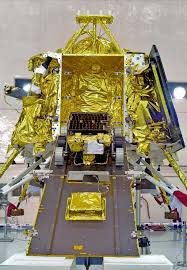
1. Lander Module (Vikram)
- The lander is equipped with advanced sensors, cameras, and a laser altimeter for precise navigation and landing.
- It is designed to handle the challenging terrain and extreme temperatures of the Moon’s south pole.
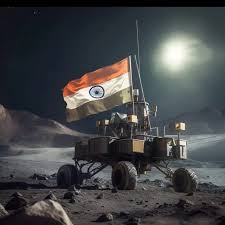
The image showcases the Vikram lander.
- 2. Rover (Pragyan)
- Pragyan is a six-wheeled robotic rover tasked with surface exploration.
- It carries instruments like the Laser-Induced Breakdown Spectroscopy (LIBS) and Alpha Particle X-ray Spectrometer (APXS) for detailed analysis of lunar soil and rocks.
- 3. Propulsion Module
- This module transported the lander and rover to a 100 km lunar orbit.
- It also carries a scientific payload to study exoplanets, adding a bonus dimension to the mission.
SScientific Discoveries by Chandrayaan-3
Chandrayaan-3 has made several groundbreaking contributions to lunar science:
1. Confirmation of Sulfur on the Moon
The Pragyan rover confirmed the presence of sulfur on the Moon’s surface, a discovery of immense geological and scientific importance.
2. Detection of Other Elements
Pragyan also identified elements like aluminum, calcium, iron, chromium, and titanium. This data enriches our understanding of the Moon’s composition and its volcanic history.
3. Surface Temperature Analysis
Vikram lander measured the temperature variations on the Moon’s surface:
- Surface temperature: Up to 50°C during the day.
- Below surface: As low as -10°C.
This information is crucial for future lunar missions and habitat design.
4. Seismic Activity (Moonquakes)
The lander detected seismic activities, providing valuable insights into the Moon’s internal structure, including its crust, mantle, and core.
Technological Innovations
Chandrayaan-3 introduced several technological advancements:
- Improved Landing Algorithms: Ensured precision landing on the rugged terrain of the south pole.
- Thermal Management Systems: Designed to withstand extreme lunar temperatures.
- Autonomous Navigation: Enabled the rover to traverse and explore the surface without human intervention.
- Redundant Systems: Included fail-safe mechanisms for mission reliability.
These innovations highlight ISRO’s commitment to enhancing India’s space capabilities.
Challenges and Overcoming Them
The journey to Chandrayaan-3’s success was not without hurdles.
- Learning from Chandrayaan-2: ISRO addressed the issues faced during the Chandrayaan-2 mission, improving navigation, landing, and communication systems.
- Extreme Conditions: The south pole’s low sunlight and harsh terrain posed challenges, which were tackled with robust engineering solutions.
Technological Milestones Achieved
Chandrayaan-3 showcased ISRO’s technological advancements:
- Autonomous Navigation Systems
The rover and lander operated independently, navigating and conducting experiments without direct human intervention. - Improved Communication Channels
The mission utilized the Deep Space Network (DSN) for real-time communication and data transmission across vast distances. - Thermal Management
Robust systems were developed to protect the instruments from the Moon’s extreme temperatures, ensuring extended operational capability. - Precision Landing Algorithms
Chandrayaan-3 featured improved algorithms for terrain mapping and hazard detection, ensuring a successful landing despite the south pole’s rugged conditions.
Global Recognition
Chandrayaan-3 has earned India global acclaim:
- It made India the first country to achieve a soft landing near the Moon’s south pole.
- The mission received accolades from international space agencies and scientists, showcasing India’s technological and scientific excellence.
Economic Impact
Chandrayaan-3 demonstrated ISRO’s ability to execute world-class missions at a fraction of the cost incurred by other space agencies. This efficiency has opened new opportunities for international collaborations and commercial ventures in space exploration.
Future Implications
Chandrayaan-3’s success sets the stage for future space missions:
- Resource Utilization: Exploration of water-ice deposits for potential use in fuel production and human settlements.
- Interplanetary Missions: Strengthening ISRO’s capabilities for Mars, Venus, and beyond.
- Global Partnerships: Encouraging joint missions with international space agencies.
Public Engagement
Chandrayaan-3 has inspired millions, especially the youth, to take an interest in STEM fields. ISRO’s transparent communication and real-time updates during the mission fostered public pride and curiosity.
Conclusion
Chandrayaan-3 is a shining example of India’s determination, scientific ingenuity, and innovation. It has not only deepened our understanding of the Moon but also positioned India as a global leader in space exploration. As ISRO gears up for its next ambitious projects, Chandrayaan-3 remains a milestone that will inspire generations to come.