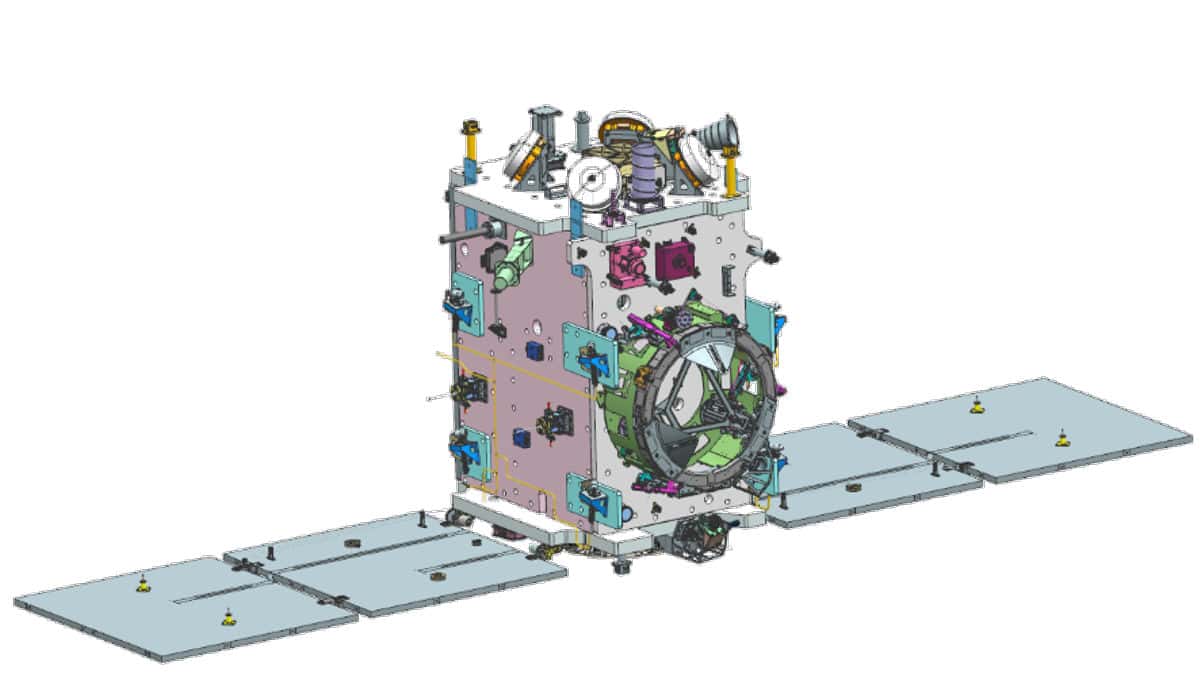
In yet another remarkable milestone for India’s space program, the Indian Space Research Organization (ISRO) has successfully launched the highly anticipated Space Docking Experiment (SPADEX) mission. This achievement places India among the select group of nations capable of demonstrating autonomous docking technology in orbit, a crucial capability for the future of space exploration.
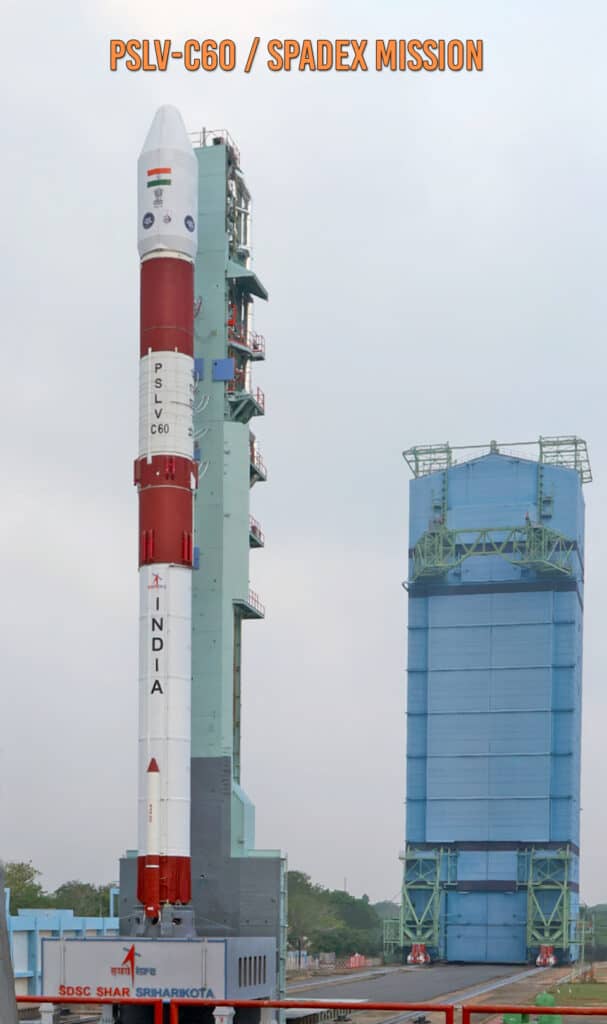
Image From ISRO
Key Highlights of the SPADEX Mission
- Launch Vehicle: The SPADEX mission was launched aboard ISRO’s trusted PSLV (Polar Satellite Launch Vehicle), a rocket known for its reliability and efficiency.
- Payload Details: The mission involved two primary modules, the Chaser Module and the Target Module, designed to autonomously dock with each other in Low Earth Orbit (LEO).
- Objective: The mission aims to demonstrate the capability of autonomous rendezvous and docking (ARD), a technology essential for modular space station construction, satellite servicing, and interplanetary exploration.
What Makes SPADEX Special?
The SPADEX mission is a first-of-its-kind for ISRO. By successfully demonstrating autonomous docking, ISRO takes a significant step toward advanced space operations such as:
- Human Spaceflight: This technology is critical for India’s Gaganyaan mission, enabling crewed modules to dock with support spacecraft or space stations.
- Space Station Development: SPADEX lays the groundwork for India’s plans to establish an indigenous space station in the coming decade.
- Satellite Repairs and Upgrades: The ability to dock spacecraft enables in-orbit servicing, extending the operational life of satellites.
Launch and Initial Mission Phases
- Launch Success: The PSLV rocket lifted off from the Satish Dhawan Space Centre, Sriharikota, carrying the SPADEX modules into orbit.
- Separation and Deployment: Both the Chaser and Target Modules were successfully deployed into their designated orbits.
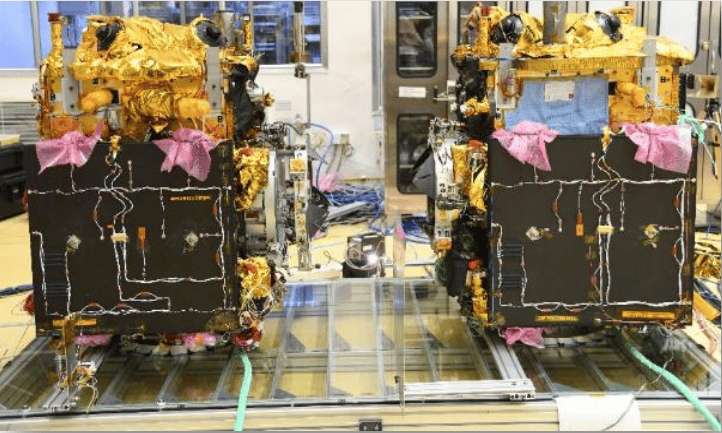
Chaser and Target module
Autonomous Docking: The Chaser Module has initiated its approach toward the Target Module using onboard sensors, cameras, and AI-powered navigation systems.
The Road Ahead
Over the next few days, the SPADEX modules will perform precise maneuvers, culminating in the historic docking event. Post-docking, ISRO will conduct a series of tests to validate data transfer, power sharing, and structural stability between the two modules.
Global Significance
This achievement elevates India’s status in the global space community. Until now, only a handful of nations, including the United States, Russia, and China, have mastered this complex technology. SPADEX showcases ISRO’s growing expertise in cutting-edge space technologies and reinforces its reputation as a key player in international space exploration.
What’s Next for ISRO?
With SPADEX setting the stage, ISRO is expected to accelerate its ambitious plans, including:
- The Gaganyaan human spaceflight program, with crewed missions scheduled in the near future.
- Development of India’s first modular space station, leveraging the docking technology validated by SPADEX.
- Enhanced interplanetary missions to Mars and beyond.
Conclusion
The successful launch of SPADEX underscores India’s growing capabilities in space science and technology. It not only demonstrates ISRO’s technical prowess but also signals a brighter future for India’s space ambitions. As the mission progresses, the world watches eagerly to witness the next chapter of this groundbreaking experiment.
Stay tuned for live updates as SPADEX reaches its critical docking phase in the coming days.