What is Space Debris?
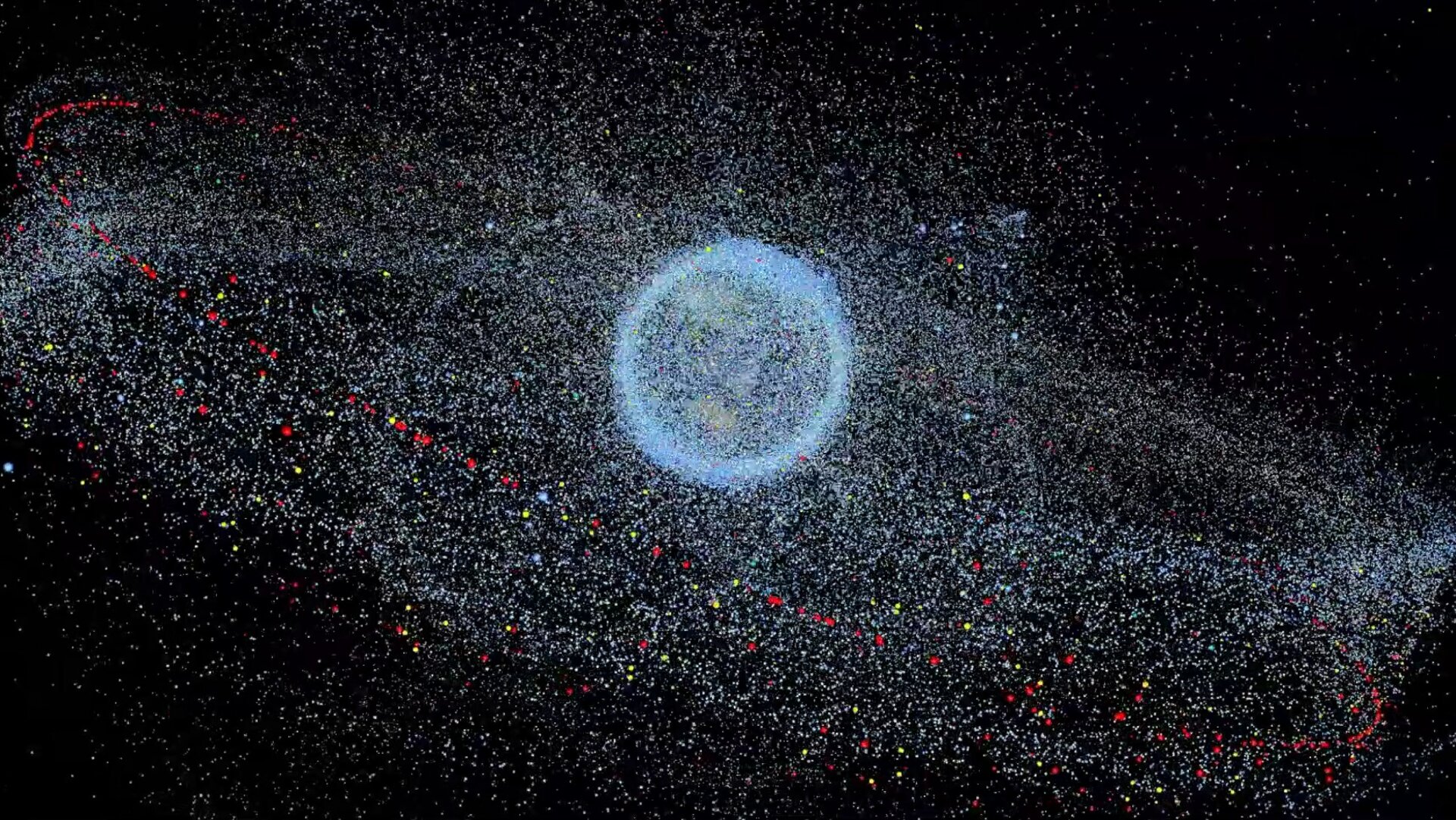
Space debris, the remnants of human space exploration, has become a critical issue in maintaining the usability of Earth’s orbit. This debris ranges from defunct satellites and spent rocket stages to tiny paint flecks lost during construction or operation in space. The proliferation of such objects began with the dawn of the Space Age, but it has accelerated with each new launch, satellite deployment, and unfortunate collision or explosion in orbit.
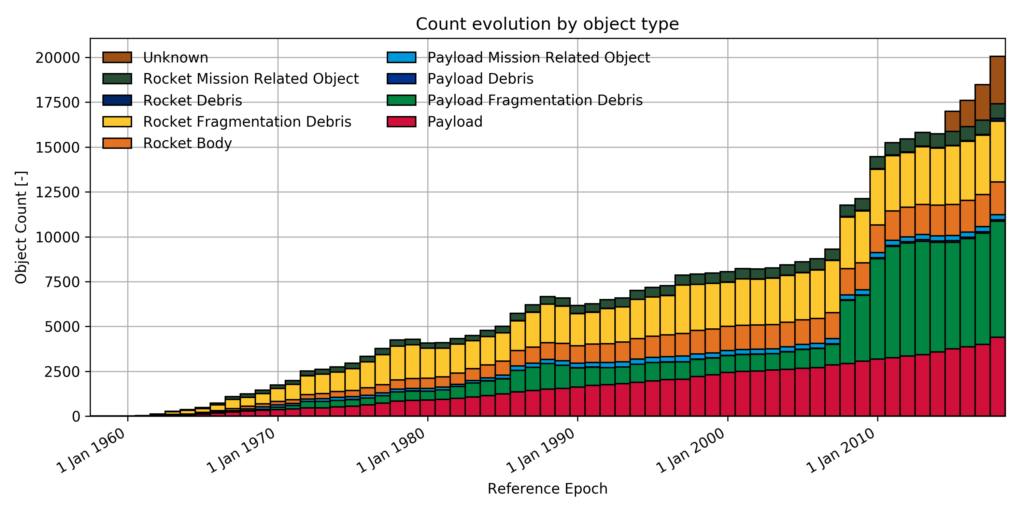
Currently, there are around 35,150 objects tracked by space surveillance networks, but this number only accounts for larger debris. Millions of smaller pieces, invisible to current tracking systems, also circle the Earth at speeds up to 28,000 kilometers per hour, posing a significant threat. An impact from even a small piece of debris can cause severe damage to operational spacecraft, leading to further debris generation and escalating the risk of a cascade effect known as the Kessler Syndrome, where collisions beget more collisions.
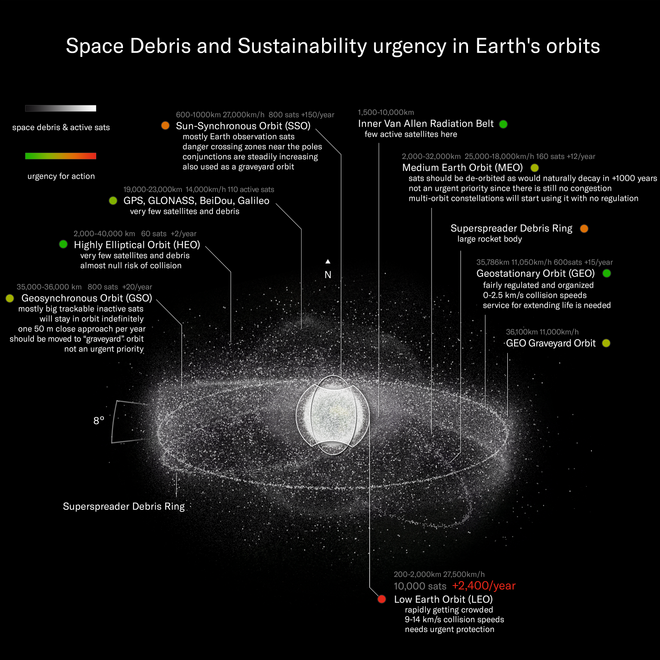
The situation is particularly acute in Low Earth Orbit (LEO), where most of the functional satellites operate, including those for communication, weather, and navigation. Efforts to mitigate this growing problem include international guidelines for responsible space behavior, advocating for the deorbiting of satellites at the end of their operational life, and designing spacecraft with debris mitigation in mind. However, these are voluntary measures, and compliance varies.
Origin of Space Debris
The origins of space debris can be categorized into two primary sources:
- Operational Satellites and
Rockets:
Decommissioned Satellites: Decommissioned satellites are those no longer in use, either moved to graveyard orbits or left to decay and burn up. Proper handling prevents them from becoming hazardous space debris.
Rocket Stages:Rocket stages are detachable parts of a launch vehicle, used to reach space efficiently. After expending their fuel, they’re discarded, potentially becoming space debris.
- Collision and Fragmentation
Events:
Accidental Collisions: Accidental collisions in space, especially at high speeds, can shatter satellites or debris into thousands of smaller pieces. These fragments multiply the debris problem, increasing the risk of further collisions and complicating space traffic management.
Intentional Destruction:
Intentional destruction through anti-satellite (ASAT) weapon tests has significantly contributed to space debris. These tests shatter satellites into thousands of fragments, creating long-lasting hazards in Earth’s orbit and escalating the risk of collisions with operational spacecraft.
significant amounts of debris, such as the 2007 Chinese ASAT test and the 2021
Russian test, each creating thousands of fragments.
Types of Space Dobris
Space debris exists in various forms and sizes, each posing unique risks:
- Large Debris: Large debris includes intact, non-operational satellites and spent rocket bodies. These objects, while not fragmented, still pose a significant risk due to their size and mass, potentially colliding with active satellites or space stations.
- Medium-sized Debris: Medium-sized debris consists of fragments from collisions or separations, ranging from a few centimeters in size. These pieces are numerous and can cause significant damage upon impact with operational spacecraft or satellites.
- Microdebris: Microdebris comprises minuscule particles like paint flecks and rocket exhaust residue. Despite their small size, these high-velocity particles can puncture spacecraft surfaces or damage critical systems, posing a stealthy but significant threat in space.
First Space Debris
The first significant instance of space debris was created on June 29, 1961, when the upper stage of a Thor-Ablestar rocket exploded in orbit after launching the Transit 4A navigation satellite. This event, known as the first satellite fragmentation, resulted in over 200 tracked debris pieces, marking the birth of the space debris problem. The explosion occurred due to the residual propellants in the rocket stage igniting, illustrating the risks of hypergolic propellants. This incident underscored the need for debris mitigation strategies, as these fragments added to the growing catalogue of orbital debris, posing potential collision risks to other space assets. The event highlighted early concerns about space sustainability and environmental management in Earth’s orbit.
Space Debris Removal Efforts and Organizations Involved
Space debris is managed through a combination of strategies focusing on both prevention and removal. Prevention includes designing satellites to reduce break-up risks and ensuring they can deorbit after their mission ends, thereby reducing the number of new debris pieces. For active removal, techniques like nets, harpoons, robotic arms, or even lasers are under development to capture or alter the trajectory of existing debris, guiding it to burn up in the atmosphere or be safely collected. Organizations like the European Space Agency (ESA) and companies like Astroscale are working on missions such as ClearSpace-1, which aims to demonstrate the capture and controlled re-entry of defunct satellites. These efforts are crucial as they help mitigate the risk of the Kessler Syndrome, where the density of objects in orbit could lead to a cascade of collisions.
Current Efforts for Space Debris Removal
- Active Debris Removal (ADR) Missions:
- ClearSpace-1: The European Space Agency (ESA) has commissioned ClearSpace SA, a Swiss startup, to launch the world’s first active debris removal mission in 2025. This mission will target an ESA-owned piece of debris in low Earth orbit (LEO) for capture and controlled re-entry into the Earth’s atmosphere.
- RemoveDEBRIS: A project developed by a consortium including Airbus and the University of Surrey, aimed at testing debris capture technologies like nets and harpoons. RemoveDEBRIS was successfully deployed from the International Space Station in 2018, demonstrating these technologies in real space conditions.
- Technological Innovations:
- Satellite Design for Debris Mitigation:
- Design for Removal (D4R): New satellites are being designed with features that make them easier to capture and remove from orbit once they reach the end of their operational life. ESA’s e.Deorbit mission and similar initiatives focus on this aspect.
- Policy and Regulation:
- International Cooperation: Organizations like the United Nations Committee on the Peaceful Uses of Outer Space (COPUOS) work on guidelines for debris mitigation. The Inter-Agency Space Debris Coordination Committee (IADC) also plays a role in setting standards for space operations.
- National Initiatives: The U.S. has been pushing for more coordinated efforts in space debris management, with NASA actively involved in developing technologies and strategies for debris removal.
Organizations Involved
- NASA: Through its Orbital Debris Program Office, NASA conducts research to reduce debris creation and explores methods for active removal. Recent reports from NASA’s Office of Technology, Policy, and Strategy have shifted focus to cost-effective remediation strategies.
- European Space Agency (ESA): ESA is not only funding missions like ClearSpace-1 but also works on developing the necessary technology and policy frameworks to manage space debris.
- ISRO: ISRO has set up this center to centralize efforts related to tracking space debris, managing collision risks, and protecting space assets.
- Astroscale: A Japanese company focused on creating a service for debris removal. Their ADRAS-J mission aims to demonstrate the technology required to target and manage large debris.
- Private Companies: Entities like ClearSpace SA, RemoveDEBRIS consortium members (including Airbus), and startups like Vestigo Aerospace are innovating in the field, often with government contracts or partnerships.
International Collaborations
- United Nations Committee on the Peaceful Uses of Outer Space (COPUOS): COPUOS plays a pivotal role by developing guidelines for space debris mitigation and fostering discussions on space sustainability. It brings together member states to negotiate and promote international standards and practices.
- Inter-Agency Space Debris Coordination Committee (IADC): Comprising major space agencies like NASA, ESA, and Roscosmos, among others, the IADC focuses on harmonizing space debris mitigation guidelines, sharing data, and coordinating research. Their efforts help in standardizing practices across different countries.
- Artemis Accords: Initiated by NASA, these accords aim to establish a set of principles for cooperation in space exploration among nations. While primarily focused on lunar exploration, they also address aspects of space sustainability including debris management.
- Bilateral and Multilateral Agreements: Countries often enter into specific agreements for joint missions or data sharing. For example, the European Union’s Horizon 2020 program has funded projects involving multiple countries to tackle space debris.
- Global Partnerships in Technology Development: Companies from different countries collaborate on technology development for debris removal. For instance, the RemoveDEBRIS mission was a partnership involving the UK, the US, and Japan, showcasing the power of international collaboration in testing new debris removal technologies.
- Space Traffic Management (STM) Initiatives: Efforts are underway to establish STM frameworks that include debris management. The International Association for the Advancement of Space Safety (IAASS) promotes safety in space operations, including debris mitigation, through international collaboration.
- Workshops and Conferences: Regular international conferences, like those organized by the International Academy of Astronautics (IAA), provide platforms for scientists, engineers, and policymakers to discuss and innovate on space debris removal strategies.
- Public-Private Partnerships: These extend beyond national borders, with private companies from different countries partnering with government agencies to develop and deploy debris removal solutions.
Public Awareness and Education
Public awareness and education on space debris have become critical as the issue grows more pressing with each satellite launch. Around the world, space agencies like NASA, ESA, and JAXA lead educational initiatives by providing schools and the public with resources such as lesson plans, interactive websites, and educational kits. These resources explain the science behind space debris, detailing its origins, the dangers it poses to operational satellites, and the strategies for mitigation. Campaigns like “Space for All” by the United Nations Office for Outer Space Affairs (UNOOSA) emphasize the importance of space sustainability, including debris management, during events like World Space Week. Educational workshops, seminars, and conferences bring together experts to discuss these topics, often open to the public to foster understanding and dialogue.
The use of digital media has been pivotal; organizations deploy social media campaigns, create YouTube videos, host podcasts, and develop interactive games like the “Space Debris Game” by the Secure World Foundation to engage younger audiences. Museums and space centers worldwide feature exhibits that visually and interactively explain the complexities of space debris, often using real artifacts or simulations. There’s also a growing trend of integrating space debris education into popular culture via films, documentaries, and gaming, which can capture the public’s imagination and educate them on the responsibilities of space exploration.
Conclusion
In conclusion, the management of space debris is an urgent and complex challenge that demands a collaborative, innovative, and proactive approach from the international community. The strategies we have discussed, from technological advancements in debris removal to the establishment of global regulatory frameworks, highlight a significant shift towards sustainable space use. The future of space exploration, commercial operations, and scientific endeavors hangs in the balance, resting on our ability to clean up our orbital environment and prevent further clutter. Through continued education, policy reform, and the deployment of cutting-edge technologies, we can ensure that space remains a resource for all of humanity, not just for the present but for countless generations to come. The task is daunting, but with collective commitment and action, a cleaner, more sustainable space environment is within our grasp.