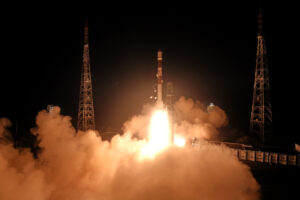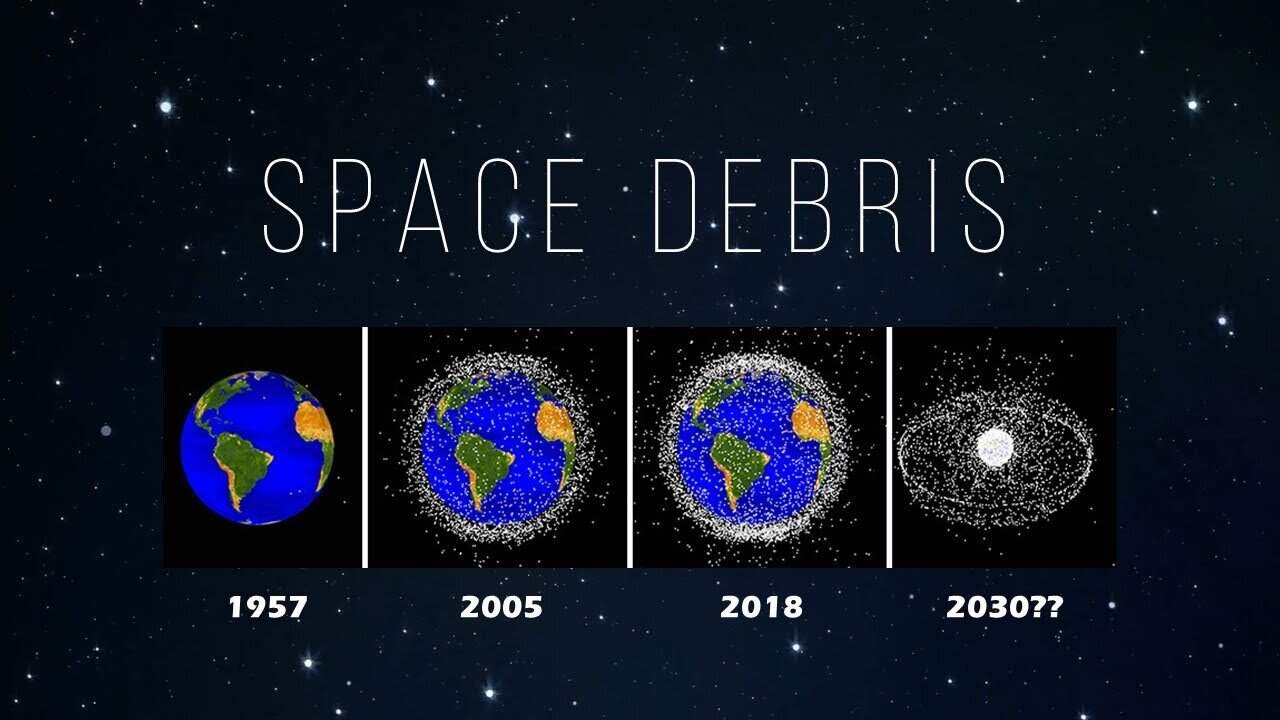
When we look at the blue sky, it feels so good to think about how fast we have progressed in the field of space. Today, thousands of satellites made by scientists are orbiting Earth, fulfilling many of our needs such as mobile and internet communication, accurate weather information, navigation systems, Earth monitoring, space research, and defense-related services. In the last 60–70 years, we have made incredible progress. But along with the increasing number of these satellites, the danger for us is also increasing. This danger is space debris—that is, human-made junk in space, which includes defunct satellites, old rocket parts, fuel tanks, and debris created by collisions of satellites.
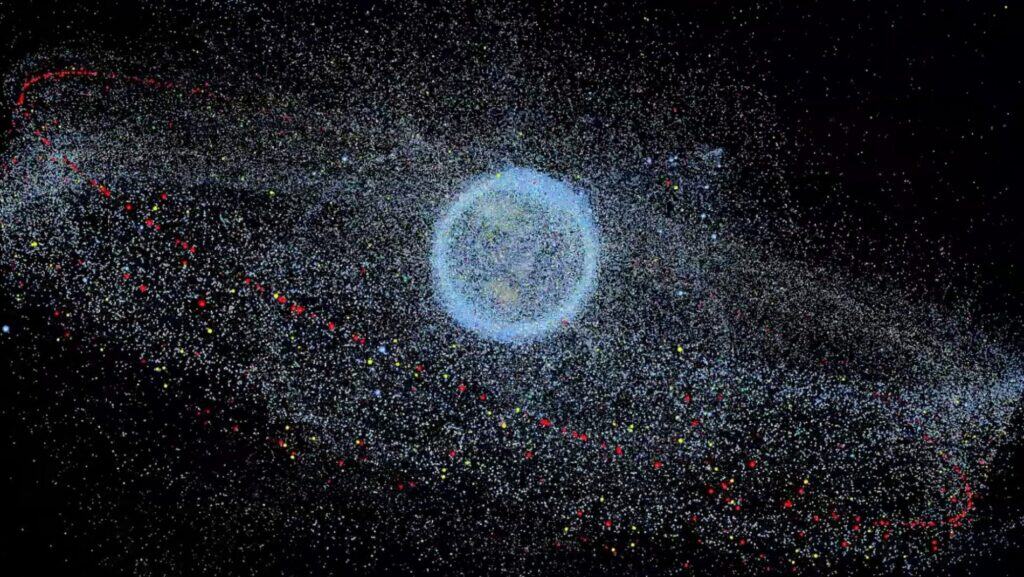
Space debris orbits Earth at extremely high speeds, reaching up to 28,000 kilometers per hour (17,500 miles per hour). At such a speed, even a small piece can pose a significant risk to any active satellite, space station, or astronaut. If this problem is not controlled in time, then in the coming future, not only space missions but also our essential services like communication, weather forecasting, and navigation can be affected.
According to ESA, in just Earth’s Low Earth Orbit (LEO), more than 27,000 pieces of tracked space debris are present. Apart from these, countless tiny particles are also orbiting. The high speed of these debris in LEO is not only a danger for space services and missions but also creates significant risks for people on Earth. There have been many incidents when space debris from Low Earth Orbit (LEO) fell to the ground.
Recently, in 2022, a large part of China’s Long March 5B rocket uncontrollably re-entered the atmosphere. This debris fell on Borneo, an island shared by Malaysia, Indonesia, and Brunei. Fortunately, it did not fall in populated areas; otherwise, a major accident could have occurred.
Today, many countries are continuously launching satellites and space missions. Because of this, space debris increases by millions of pieces each year. Now many private companies have also joined this race, such as SpaceX, Blue Origin, and Boeing.
SpaceX has launched about 6,000 satellites for its Starlink network. In the future, thousands more satellites are planned. This can accumulate many tons of space debris in LEO. However, SpaceX’s satellites are designed in such a way that 95% of their components burn up in the atmosphere after mission completion.
The problem arises when a satellite fails during its mission. If control is lost, it keeps orbiting in LEO for many years. Many such incidents have already happened. Such uncontrolled satellites move rapidly in LEO, which can pose a significant risk to new satellites and future missions.
If a solution for space debris is not found in time, it can have serious consequences. The way the number of debris pieces in Earth’s orbit is continuously increasing, the threat of Kessler Syndrome is also rising.
Kessler Syndrome

Kessler Syndrome is a concept introduced in 1978 by NASA scientist Donald J. Kessler. According to it, if space debris continues to accumulate in orbit, the probability of collisions between them will increase. When they collide, thousands of fragments will be created. Those fragments will collide with other satellites, creating thousands more pieces. This process will continue indefinitely. Because of this, the orbit, or a large part of it will become so dangerous that all active missions will be destroyed. In the future, launching new satellites or missions will become almost impossible. One such incident has already occurred in the past, which can be considered a sign of Kessler Syndrome.
This incident happened on February 10, 2009, when an active American satellite, Iridium 33, and an inactive satellite, Cosmos 2251, collided in Low Earth Orbit (LEO) at a relative speed of about 42,000 km/h. More than 2,000 trackable fragments and countless microscopic particles were spread in space. Although this collision did not damage other satellites, at that time many satellites had to change their orbits.
Such incidents strengthen the possibility of Kessler Syndrome occurring in the future.
Solutions and Efforts
Active Debris Removal (ADR) ProgramThe European Space Agency (ESA), through its ClearSpace-1 mission in 2026, will use a Robotic Capture System (RCS) (robotic arm, net, harpoon, or magnetic tether) to remove space debris. Through this, old satellites or debris will be captured and taken into lower orbit so that they gradually burn up in Earth’s atmosphere.
Laser Debris Removal (LDR)
Through Laser Debris Removal (LDR), powerful laser beams can be used to vaporize small debris or change their orbit to a safer area so that the debris gradually enter the atmosphere and burn up. Some countries are testing this, but it is not happening on a large scale yet.
Small and Biodegradable Satellites
All space agencies should build satellites that are small, lightweight, and made of materials that completely disintegrate when entering the atmosphere after their mission. Passive Deorbiting Technology
Through this, new satellites can include drag sails or electrodynamic tethers so that after mission completion, satellites automatically exit orbit. The use of drag sails has started in some new satellites, and all major space agencies (NASA, ESA, and ISRO) are promoting it. Especially the private space agency SpaceX is working rapidly on this.
Tracking and Collision AvoidanceThis is a very important step, which all space agencies must work on together. Through this, old defunct satellites or large debris must be tracked so that active satellites can be shifted in time to avoid collisions. This is extremely important because collisions can break debris into thousands of pieces, which can be dangerous for future missions and active satellites. However, space agencies like NASA and ESA are already working on this and have often changed satellite orbits to avoid collisions. Agencies like JAXA and ISRO are also making efforts, but this needs to be done on a larger scale.
International Space Debris Management LawsIt is critical to establish strict international laws, which all space agencies in the world must follow. Although the international space community, such as the United Nations Office for Outer Space Affairs (UNOOSA), has issued debris mitigation guidelines, and organizations like NASA, ISRO, and ESA are following the 25-year rule, which requires satellites to be deorbited within 25 years of mission completion, most of the world’s space agencies are not following it. Therefore, it is critical to establish strict international laws.
International Space Debris Management OrganizationAn organization should be created through which efforts can be made collectively to monitor and remove debris. Currently, there is no formal international organization for this.
Conclusion
We’ve done some crazy stuff in space, linked the world with satellites, and cracked open the universe’s secrets. But this space debris mess is getting serious, threatening our satellites, missions, and even Earth. That 2009 Iridium-Cosmos crash and China’s Long March 5B falling are big red flags. If we don’t get a grip, Kessler Syndrome could shut down space, and our communication, navigation, and weather services might go kaput. The good thing is, people are working on it. ESA’s ClearSpace-1 mission, lasers to zap debris, biodegradable satellites, and drag sails are in the works. Tracking and dodging collisions are helping too, but we have to take it up a notch globally. We need strict international rules and a global team to track and clear this junk. We’ve achieved so much in space; now we have to protect it. If agencies, private companies, and governments team up, we can clean up the orbit. The sky’s huge, but it’s on us to keep it clean and safe for the next generation to enjoy.